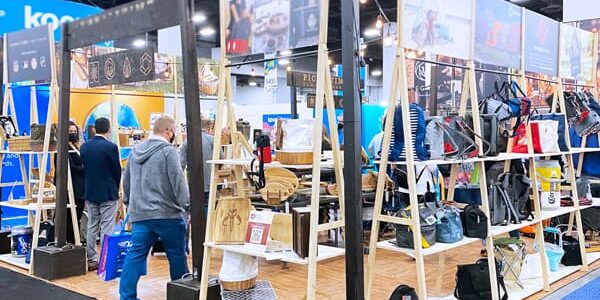
You’ve booked your first trade show booth. Congratulations! Now comes the paralyzing question: what do you actually put in it? Staring at an empty 10×10 space while browsing websites full of confusing terms can feel completely overwhelming. This guide cuts through the noise to show you how to choose trade show display products that look professional and get results, step-by-step.
The secret to avoiding decision fatigue is to think about your booth in three simple layers. First, you need the Foundation—the absolute trade show booth essentials that make you look credible from across the aisle. Next, you can add Accents, which are the smart, affordable additions that help you communicate your key message. Finally, you can explore Upgrades to truly make your trade show booth stand out and create a memorable experience.
Following this simple framework removes the guesswork and ensures you invest your budget wisely. In practice, a successful display is about making smart choices, not just spending more money. This plan will help you turn that empty space into a magnet for your ideal customers.
What’s the Best Backdrop for Your Booth? Pop-Up vs. Fabric Displays
Think of your 10×10 booth space as a blank stage; the backdrop is the stunning scenery that sets the entire mood. It’s the single most important element for grabbing attention from across the aisle. For most first-time exhibitors, the choice comes down to two excellent, portable options: the classic pop-up display and the modern fabric display.
A pop-up display is built on a metal frame that expands like an accordion. Your graphic panels, which are often printed on a semi-rigid material, attach to this frame with magnets. Its biggest advantage is speed. You can literally “pop it up” in a minute or two, making it a lifesaver for quick setups. The trade-off is weight; the sturdy frame makes the whole system heavy, often requiring a large, wheeled case for transport.
In contrast, a fabric backdrop (sometimes called a tension fabric display) uses a lightweight, tubular aluminum frame that you connect piece-by-piece, much like tent poles. A single, large graphic printed on stretchable fabric then slides over the frame like a pillowcase, zipping shut to create a smooth, seamless wall. These are among the most lightweight portable exhibit systems available, often fitting into a duffel-sized bag.
So, how do you choose? The decision often boils down to one simple question: how are you getting to the show? If you’re driving and can easily transport the heavier case, the ultra-fast setup of a pop-up display is fantastic. But if you’re flying, the feather-light nature of a fabric display will save you a fortune in shipping costs and checked baggage fees, making it the clear winner for travel-heavy schedules.
With your main wall sorted, the next step is establishing your “front counter” for conversations.
The Easiest Way to Look Professional: Choosing Your Table and Cover
If the backdrop is your scenery, the table is your front counter—the focal point for every conversation. The single most cost-effective item on any trade show booth essentials checklist is a branded table cover. It instantly transforms the standard, often scuffed, table provided by the venue into a professional centerpiece, making your space look polished and intentional. Nothing says “I’m open for business” more effectively for such a small investment.
Beyond just looking good, this essential piece of fabric serves a critical, practical purpose: it creates hidden storage. Your extra brochures, personal bag, and water bottles can be tucked neatly underneath, completely out of sight. A clean, organized booth invites conversation by removing distractions, which is a key part of setting up a booth for lead generation. A cluttered table, on the other hand, can create an unintentional barrier.
When you shop for a cover, you’ll generally choose between two styles. A throw style cover drapes over the table for a classic, relaxed look, giving you some flexibility if you aren’t sure of the exact table dimensions. For a sharper, more modern feel, a fitted style cover is tailored to stretch or zip snugly around the table, creating a clean, wrinkle-free surface. With your main backdrop and table establishing your brand, you can now add smaller, strategic messages to guide your visitors.
How to Use Retractable Banners to Highlight Your Key Message
Your backdrop grabs attention from across the aisle, but what about communicating a specific offer or product feature? This is the perfect job for a retractable banner. Often called a “pull-up banner,” this portable sign is one of the most versatile and essential trade show marketing materials you can own. Think of your backdrop as your company’s main billboard and a retractable banner as the focused advertisement right by the door—it’s meant to highlight one compelling message, like a “Show Special,” “New Product Launch,” or a key benefit that solves a customer’s problem.
Beyond their strategic value, the biggest advantage of these banners is their incredible ease of use. A retractable banner packs down into a small, lightweight base and can be set up by one person in less than a minute. You simply place the base on the floor, pull the graphic up, and hook it onto a collapsible pole. This speed and simplicity are a lifesaver during the stressful final minutes before the show opens, giving you a professional look with almost zero effort.
When considering your 10×10 trade show booth layout ideas, placement is everything. The best practice is to position your retractable banner at a front corner of your booth, angled slightly toward the flow of traffic to catch the eye of passersby. Avoid placing it directly in front of your table, as this creates a physical barrier between you and potential customers. You want to invite people in, not block them out.
Guide to Trade Show Graphics: What to Put on Your Display (and What to Leave Off)
With your display hardware chosen, you now face a blank canvas. What you choose to print on it is the most critical factor in your success. In the crowded, fast-moving environment of a trade show floor, you must follow the “3-Second Rule.” This is the average amount of time you have to catch an attendee’s eye and communicate who you are and what you do. If they can’t understand your purpose at a glance, they will keep walking.
The single most common mistake first-time exhibitors make is trying to put too much information on their backdrop. Long paragraphs, a laundry list of bullet points, and multiple website URLs create a cluttered, unreadable mess from more than a few feet away. Remember, your display is a billboard, not a brochure. The secret to how to make a trade show booth stand out is clarity, not comprehensiveness.
A better approach in your guide to trade show graphics and branding is to give each element a specific job. Think of your backdrop as the big-picture brand statement. Your banner stands can then highlight a specific action or offer. Finally, your brochures or sell sheets are for all the nitty-gritty details a truly interested prospect will want. This message hierarchy ensures people get the right information at the right time.
When planning your custom exhibition stand design, keep the backdrop focused and clean. A great design almost always includes just three things:
- Your Logo (big and high up)
- Your Tagline (5-7 words explaining what you do)
- One High-Quality Image
Beyond Pens and Candy: Choosing Trade Show Giveaways That Attract Real Customers
It’s tempting to fill a bowl with candy or order a thousand cheap pens, but think about who you’re attracting. While these items might draw a crowd, they rarely attract your ideal customer. People will grab a freebie and walk on without a second thought, leaving you with empty wrappers and no real leads. The best trade show giveaways to attract visitors are the ones that filter for quality, not just quantity, acting as a crucial part of your trade show marketing materials.
Instead, view your giveaway as a conversation starter that offers genuine value. Ask yourself: what’s a small problem my ideal customer has right now, on this show floor? If you sell software to busy professionals, a branded phone stand is far more useful than a keychain. This allows you to open with a relevant question like, “Need a hand keeping your screen visible?” It instantly connects their problem to your thoughtful giveaway, creating a natural entry into a sales conversation.
This strategic approach means you might spend a bit more per item, but your overall investment will be much more effective. A handful of quality conversations with genuine prospects is infinitely more valuable than hundreds of fleeting interactions with people just hunting for free stuff. A relevant giveaway is a powerful first step in qualifying visitors. Once you’ve drawn the right person in with a thoughtful item, how do you keep them engaged?
How to Create an Interactive Booth (Without a Huge Budget)
The word “interactive” might bring to mind expensive touch screens and complex technology, but it doesn’t have to be that complicated. At its core, an interactive element simply gives visitors an easy way to engage with you, which is crucial for setting up a booth for lead generation, especially during busy periods. One of the best ways to do this is with a tool you might already own: a tablet. Display your tablet or monitor for ease of use and maximum impact with a Kiosk or Tablet Stand.
Instead of relying on a pen and a messy sign-up sheet, placing a tablet in a secure stand creates a self-service information station. Visitors can discreetly enter their details into a simple form or watch a short, looping video of your product in action. These are wonderfully cost-effective trade show display options that look professional, keep your lead data organized, and free you up to have more meaningful conversations.
Another powerful and simple tool is the QR code. By adding a QR code to your backdrop or a small sign, you give attendees a direct link to more information without cluttering your booth with stacks of paper. A quick scan can take them to your website, a detailed PDF brochure, or even a page to book a demo. These simple interactive trade show booth ideas ensure your message goes home with visitors, right on their phones.
Putting It All Together: A Simple 10×10 Trade Show Booth Layout
Now that you have your key display pieces, where do you put them? The most common mistake exhibitors make is placing their table directly across the front of their booth. While logical, this creates a physical barrier that makes your space feel closed off. Instead, the goal is to create an “open” layout that feels welcoming and invites attendees to step inside. This subtle shift is one of the easiest ways to make a trade show booth stand out from a sea of fortress-like tables.
Here is one of the most effective 10×10 trade show booth layout ideas: push your table to one side. By placing your backdrop against the back wall and your table along either the left or right side wall, you create an “L” shape. As you can see in the diagram, this simple move opens up a clear path for visitors to walk directly into your space, turning it from a storefront they pass by into a room they can enter. You now have a comfortable area for conversations, away from the busy aisle traffic.
With this foundation, setting up a booth for good traffic flow is easy. Place your retractable banner or tablet stand at the front corner opposite your table to visually frame the entrance. An attendee’s eyes will be drawn from the banner, into your open space, and toward you at your table, creating a natural journey.
Take the guesswork out of your layout, and check out Booth in a Box Pop Up Display Kits.
Your Essential Trade Show Booth Checklist for a Stress-Free Show
You’ve transformed confusion into a clear plan. Where you once saw a daunting, empty 10×10 space, you now see a strategic blueprint. You can confidently select the right backdrop, table, and banners to create a professional look that attracts visitors.
To ensure you don’t miss a single detail, here is your final trade show booth essentials checklist.
- Display Essentials: Your backdrop, a branded table cover, a retractable banner stand, and a literature rack to keep things tidy.
- Marketing Materials: Business cards, informative brochures or flyers, and any promotional giveaway items.
- The “Don’t Forget” Toolkit: Zip ties, a power strip with an extension cord, scissors, a dedicated phone charger, a bottle of water, and mints.
Your booth is no longer an intimidating expense, but a powerful tool you can control. This list isn’t just about packing; it’s your peace of mind, ensuring you can focus on what truly matters: connecting with people. Walk onto that show floor knowing you are prepared, professional, and ready for success. You’ve got this.